President Obama addresses the weight of leadership
Obama Africa Leader Arlette Irankunda asked President Obama about leadership, and she applied his advice to transform her work in Burundi.
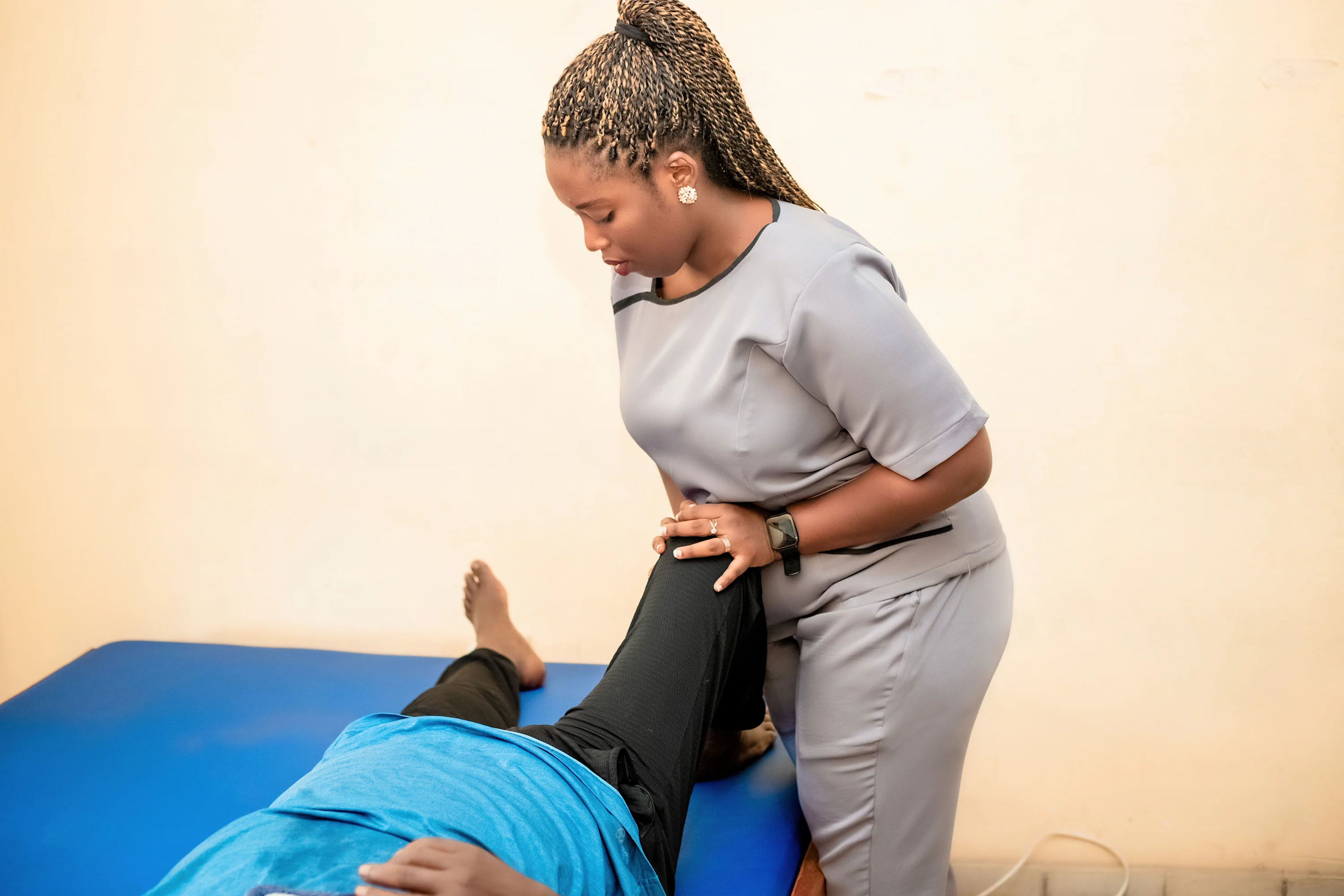
When Arlette Irankunda joined a virtual roundtable with President Obama, she came with a question she had been carrying for a long time—one that had been quietly weighing on her as she balanced a clinic full of patients, an NGO she helped found, and a family.
Irankunda, a 2025-2026 Obama Africa Leader, is a physiotherapist based in Bujumbura, Burundi, and the founder of Bridges to Inclusion, a nonprofit working to provide mobility aids and to create accessible environments for children with disabilities.
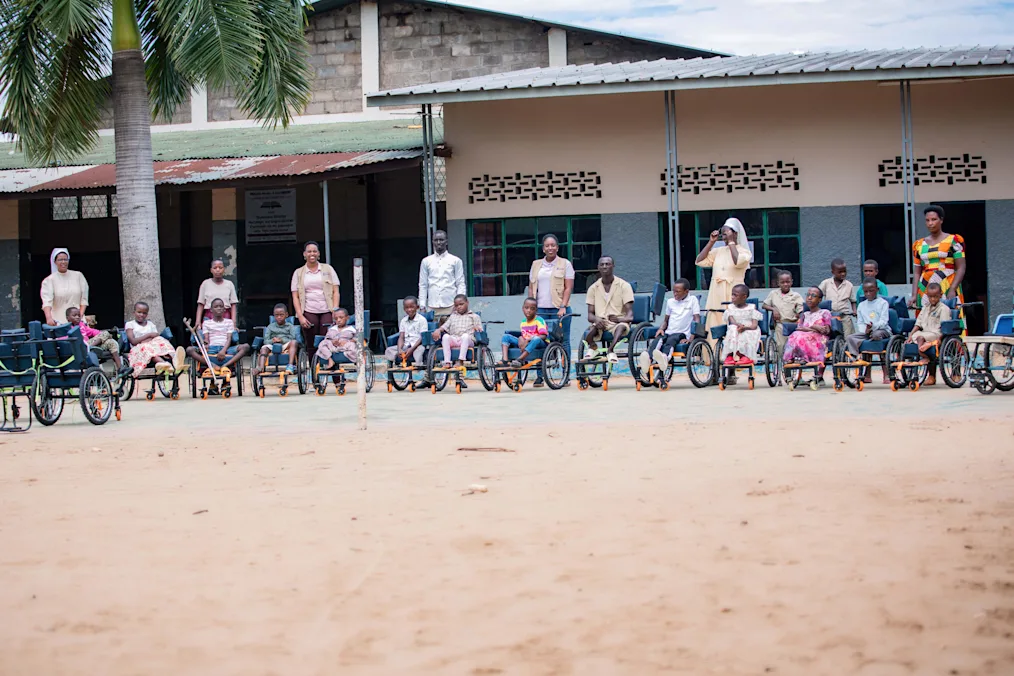
Her path to this work began in 2022, when a mother came to Irankunda’s clinic after learning her child would one day need a wheelchair. The mother's question was simple: where could she get one? Irankunda didn't have an answer. In her community in Burundi, pediatric wheelchairs were hard to find. Pharmacies told families to wait until a child was big enough for an adult chair. It's a wait that, for many children with degenerative conditions, would never come.
"If you have a child who has a disability… those children are hidden,” Irankunda said of attitudes in her community. “They don't go to school."
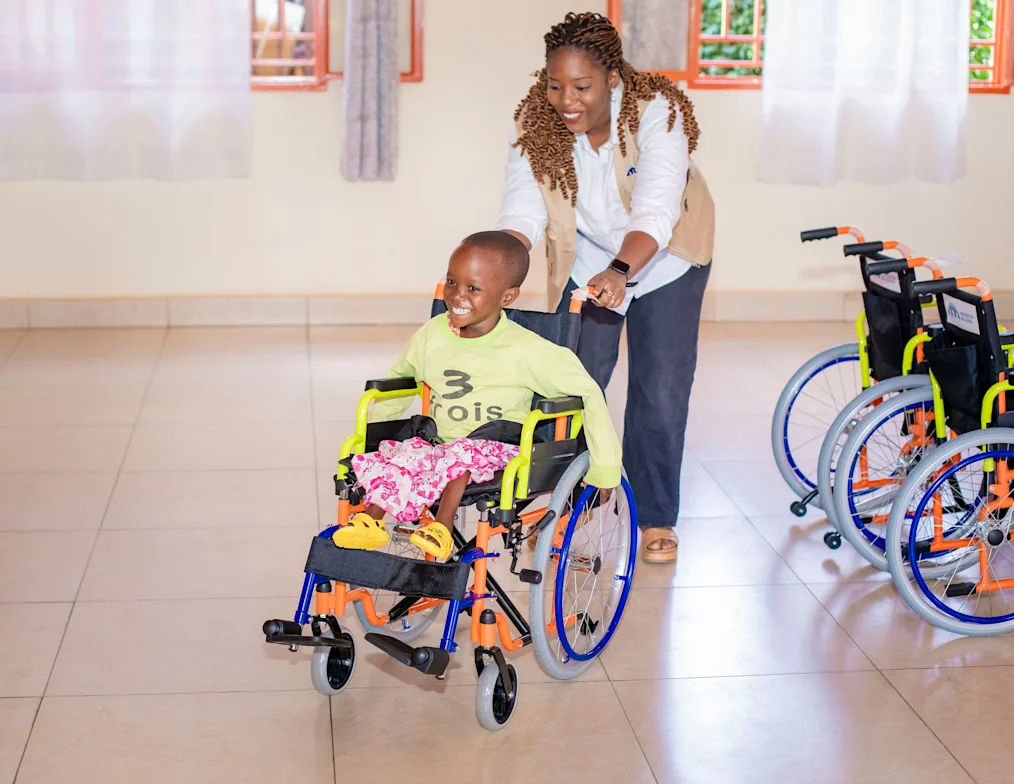
What began as an unanswered question at a clinic grew into Bridges to Inclusion, which has since distributed nearly 100 wheelchairs and is working to make schools, playgrounds, and public spaces accessible to the children who use them.
But she says running a physiotherapy clinic every day of the week, chairing an NGO, and being present in all her various roles began to feel like too much.
When Irankunda learned she would have the chance to speak directly with President Obama through the Obama Leaders Africa program, she knew exactly what she wanted to ask.
"He might also have the same challenges in terms of responsibilities like us," she recalled thinking. "I wanted to ask him and see how he manages all his responsibilities while staying true to himself."
During the session, she put the question plainly: " In my work with children with disabilities, there are moments where the expectations are high, the challenges are constant, and the responsibility feels deeply personal. How did you learn to carry that weight without letting it affect your clarity, energy, or sense of purpose?"
President Obama's answer was exactly what Irankunda needed to hear.
1. Take care of yourself physically.
President Obama said the body is not an afterthought; it's the engine. He described making daily exercise nonnegotiable, not for appearances, but for function. "You have to take care of yourself physically," he said. "I would work out every day for at least half an hour some time in the morning. So that I had some energy and I had a sense that I could move through the world during the day feeling okay."
For Irankunda, this advice resonated.
2. Make time for community and the people who lift you up.
The second point was one President Obama made personal, drawing on his experience as someone who describes himself as an introvert. Despite that, he said, maintaining close friendships has always been essential. "You have to make time for community, friends, family, and people you love because they will help lift you up," he said. "No matter how busy I am, I'm still finding some time, even if it's a short, quick moment, so that you don't feel as if everything in your life is just work-related and everything is at stake every time something goes wrong."
He even offered a laugh at his own expense: His wife, Michelle Obama, he noted, has friends who will sit and talk for five or six hours straight, something he still doesn't quite understand but has learned to appreciate as the kind of connection that sustains people.
"Oh my God, that's me and my girls," Irankunda laughed.
3. Take the long view. Change doesn't happen overnight.
The third point hit her closest to home. Irankunda works in a field where progress is slow. Children with disabilities in Burundi face systemic barriers that a single wheelchair or a ramp cannot fix.
"Sometimes when we are putting the efforts in, we want to see the results because it's like you're pouring in, but you're not seeing anything back."
President Obama spoke directly to this feeling. "Changes don't happen right away," he said. "People make steady progress. They chip away at a problem; they build and work to achieve something. It doesn't go in a perfect straight line."
Then, he spoke to Irankunda’s work specifically: "In your case, Arlette, if you are initially helping a few families and you're able to mobilize some resources for children who previously would have been abandoned or neglected, and you're giving them some chance at a happy, satisfying life... that's a big deal."
President Obama asked her and all the leaders present to hold onto the longer arc of change. "You add years of that progress and refining your ideas and your techniques, and you're learning how to communicate to the public about why this is important. And now, suddenly, you have young people who participated in your program who are now showcasing what they can do, which is inspiring others. You look back after having done that for a few years, and you realize, 'Wow, look what I did.’ That's good. That's important.'"
Irankunda describes the advice as something she already knew but had stopped practicing.
"It's in my mind," she expressed, "but with what I do, it's something that I tend to forget or not take care of. So it was like a reminder, and coming from someone like him, it's like a wakeup call."
The Obama Leaders Africa program reinforced the shift. It was, she says, unlike any leadership program she had encountered before.
"It was my first time being in a program that's about me—my leadership style and how I lead other people. It was kind of like a mirror where you have to look at yourself all the time," she said.
Today, Irankunda clocks out at 5:30 p.m. Calls from work go unanswered until the next day. She is back at the gym. The work continues, but she is no longer running on fumes.
She says moments when a child who has been confined to a room finally sees the street, watches cars pass, and becomes an active part of their community make her hard work worthwhile. Building on these moments, Irankunda’s goal is to provide accessibility access to two to three million children in Burundi.
"That's priceless," Irankunda shared. "Those are the kind of moments that keep me going."