Change, and K-pop: Barack Obama’s Unlikely Role in 1VERSE Origin Story
How an Obama Foundation convening sparked the creation of 1VERSE, the world's first K-pop group featuring North Korean defectors, blending global music with social impact.

There was something about the way Jonghyun, a K-pop idol, tenderly sang the words, “You did a good job today, you worked so hard // You are my pride,” that made Minkyung Michelle Cho cry when the song “End of A Day” popped up on her playlist.
Cho was in her dream job—scouting talent, leading creative conversations and bringing international talent into K-pop, working with producers for Beyoncé, Justin Bieber and Ariana Grande. Cho grew up playing piano and flute but knew the odds of success were slim, so she pursued a more practical path, studying international relations at Korea University and earning a master's in education policy at Harvard University. Once there, an audition TV show for K-pop aspirants reignited her love of music and made her think more about K-pop as a career.

Cho was likely the only applicant for a rare open role at SM Entertainment with a resume in international policy—enough to pique the hiring manager’s interest. Now, as an artist and repertoire representative at one of Asia’s biggest entertainment companies, she was working 16-hour days for months on end, including weekends and holidays.
“These are some of the words I think I've been striving my entire life to hear, especially from my parents,” Cho said in a September video interview. “Asian parents are very strict. I think it's very well known that they're like Tiger Moms, right? So they constantly encourage their children to strive for the better. My life was that race. So hearing somebody just tell me, ‘You've done enough, like you've done really well. I'm very proud of you’ was something that made me really emotional.”
She continued, with emotion in her voice: “I love music with lyrics, because when you're not really able to put words into what you're feeling, (singers) do that for you, and you feel like somebody is empathizing with you, speaking your emotions on behalf of you.”
This sentiment was in Cho’s heart years later.
In 2019, she attended Obama Leaders Asia-Pacific convening which launched the Obama Leaders program in the region, bringing together 200 leaders from 33 nations across Asia-Pacific to participate in a multi-day leadership development experience to equip them with the training, connections, and networks to take their work forward in new ways. During a session where participants reflected on their five-year goals—a moment shaped by the event’s theme of openness and vulnerability—Cho shared that she wanted to produce her own K-pop group.

It was an unlikely admission, at a convention center, in a room of civic, educational, and business leaders. Joseph Lim, who was then a United Nations staffer, remembers the moment. It changed his life. And he was looking for a change; when he applied for the Obama Leaders program, he’d grown frustrated at the slow progress intrinsic to his international work.
Investigative journalist Ian Yee was also there—though he wouldn’t realize how the convening would also change his life until later. At the time, he was burnt out, struggling in an industry where mental health, especially for investigative journalists, is rarely a priority.

“There’s this old myth that investigative journalists have to be lone wolves in the corner of the newsroom working obsessively by themselves,” Yee said. “There's no room for vulnerability. There's no room for sharing. So my mental health was terrible. My sense of wellbeing was really, really poor at the time.”
The journalist expressed interest in the leadership program, he said, because President Obama's values during his 2008 presidential campaign had resonated with him halfway around the world.
So there they were: Yee feeling isolated, Lim ready for a career change, and Cho looking for her next thing. As it happened, Cho was sitting beside a man who had fled the Democratic People's Republic of Korea, and someone asked if she’d ever work with someone like him, a novel question at a time when people from the north of the peninsula weren’t represented in K-pop.
“When we were having that casual conversation in Kuala Lumpur, I said there's no reason why I can't, if they're talented,” Cho remembered.
The conversation stuck with Cho and Lim in the weeks after they returned to the Republic of Korea—which was the point of the convening event. Since its inception, the Obama Foundation has supported more than 1,800 leaders through the Obama Scholars, Voyagers, and additional Leaders programs in Europe, Africa, and the United States, including by bringing them together in person to spark ideas to change the world.
Using the training from the program and support of their cohort, Cho and Lim co-founded Singing Beetle in 2022, an independent entertainment company focused on making K-pop, a global phenomenon, more inclusive. Soon, Cho found two talented Democratic People's Republic of Korea defectors, Seok and Hyuk.
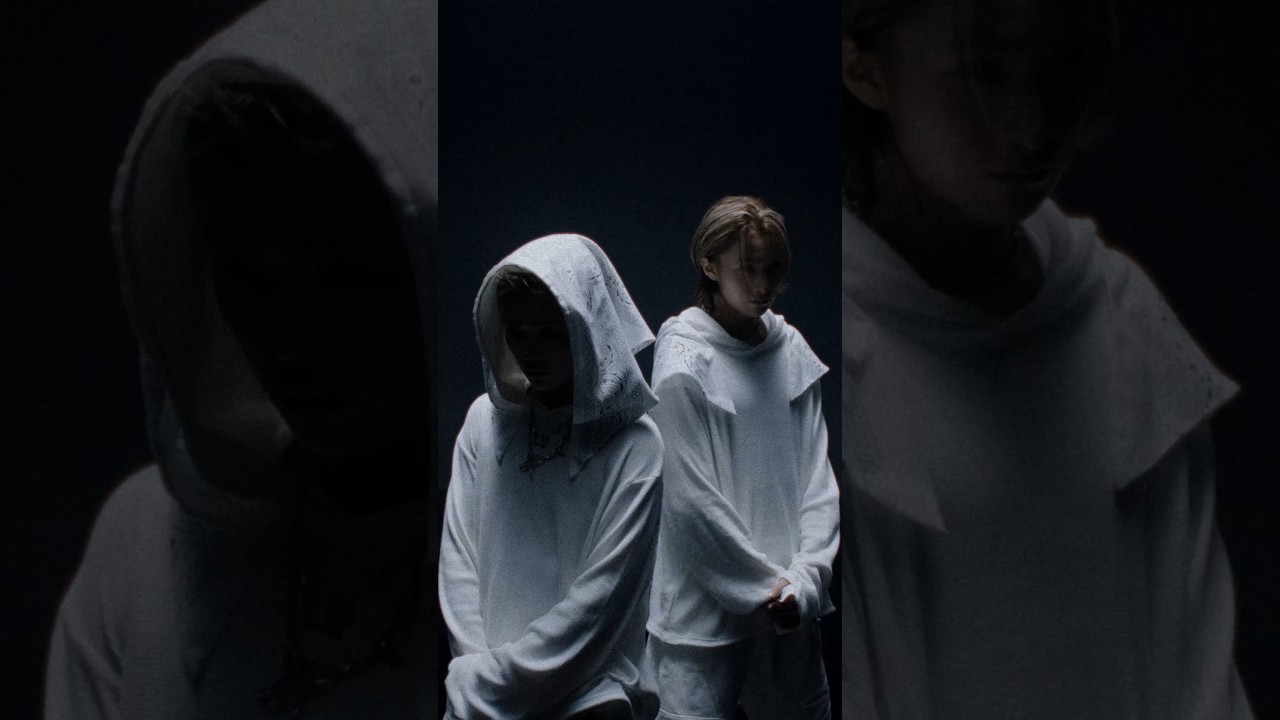
Together, they became the starting point for 1VERSE, the first K-pop band to come out of a U.S. president’s legacy work.
1VERSE, pronounced Universe, made their U.S. debut in July 2025 with the singles album “The 1st Verse.” They’re averaging more than 88,000 monthly listeners on Spotify, putting them in the top .1-.5 percent globally on the platform, and mounted a world tour in 2026.
The group immediately earned international media attention focused on Seok and Hyuk, the men from the Democratic People's Republic of Korea. Other members of 1VERSE are Kenny from California Nathan from Arkansas, and Aito from Japan. 1VERSE members go by their first names.
“Coming into this group, it’s kind of like everyone’s the outsider,” Nathan explained. The men communicate through English, Korean and body language, he said. “We kind of just try to find our place in the group together. There are cultural differences as well. (But) because we hang out with each other so much, and we try so hard to adapt to each other's culture, we're just constantly learning.”

1/5

2/5

3/5

4/5

5/5
New Ways to Make K-Pop and Inspire Social Change
In building Singing Beetle, Cho and Lim reconnected with their Obama Leaders cohort. Yee became one of their first investors. His newsroom, The Fourth, tackles social injustice in Malaysia and Southeast Asia through investigative documentaries and public action campaigns, which regularly gain support from local celebrities. For example, Yee’s team pushed Malaysia’s Parliament to pass sweeping laws against online child sexual exploitation.
“So when (Lim and Cho) said that, ‘We're working now with K-pop artists who are from North Korea,’ that just made sense to me,” he explained. “The Fourth has worked with artists before for our campaigns, and when they told us about the social impact aspect of their agency, it just sounded like the perfect fit.”
But it was more than that, he continued. Yee said he was transformed at the convening, realizing that he could admit how hard it was to spend so much time looking at all the wrongs in the world and trying to get people to make them right.
With initial funding secured and most members in place, Cho moved deliberately. In her years at SM Entertainment, she’d come to feel that there was so much potential in K-pop, that it could reach even wider audiences, if producers gave artists more creative freedom in expressing their identities and personal stories. She wanted to empower members to write their own lyrics, be themselves on social media, and when Kenny asked if he could help scout talent, she consented. He spotted Nathan’s homemade singing videos on YouTube.
“I am the quality control tower of the company, and the boys are quite encouraged to participate in a lot of the creative process,” Cho said.
Nathan spent his childhood singing and dancing for family. At 15, he saw the K-pop band EXO’s “Growl” video on YouTube and spent the next eight years posting his performance videos to social media and sending out audition tapes. But the competition to become a K-pop star is vast, and eventually Nathan started working part-time and studied graphic design at Northwest Arkansas Community college, and then studied computer science at Southern New Hampshire University. But he kept doing music on the side, he said.
“I grew up in Arkansas. Arkansas is not the worst of anything. I love Arkansas. But I think because I grew up in a small town, I feel like some people feel like… they can't get out of there, or they can't pursue their dreams. And, when I lived in Arkansas, they didn't have K-pop dance classes. They didn't have K-pop singing classes. There's not anything to really help push that dream forward.”
So, he continued, it doesn’t matter where someone is from, as long as they have passion for their dream.
“The secret to pursuing it is just sticking with it,” he said. You just got to stick with what you love.”
Although, it helps if along the way, someone gets a little support from the networks nurtured by the 44th President of the United States.
Personal Stories, Global Impact
1VERSE members Kenny, Hyuk and Nathan are working with Cho on songwriting, part of Cho’s mission to create music from personal stories.
There are about 34,000 people who have fled the Democratic People's Republic of Korea in The Republic of Korea according to the latter’s Ministry of Unification. But as a lyricist, Hyuk has a story singular in K-pop. When he was 9, Hyuk started begging on the streets of North Hamgyong Province, which borders China and Russia. He also ran errands for soldiers, chopped firewood and foraged for mushrooms to support himself, he told the BBC in July. He was 13 when he set off for Seoul. He’d never heard K-pop before. It’s banned in the north and distributing it is punishable by years of hard labor.
After being spotted writing lyrics during class, Hyuk was encouraged by a high school teacher to try rapping, according to the same BBC interview. For example, one of the band’s first singles, “Shattered,” reflects the moment Hyuk learned his dad—who stayed behind while he reunited with his mom in the Republic of Korea—had died. Cho said each member of the group, all of whom sing or rap on the single, infused the lyrics with their own “life shattering moments.”
“Feelin' lost, not good enough // Now, everything's torn apart // Shattered hearts (Back, back, back) // We can never go back, back, back // I'm feeling shattered.”
The band’s creative process for writing songs can vary — sometimes the men bring in lyrics they’ve been working on independently and other times Cho leads them in songwriting sessions. For example, Cho said she may ask them to talk about a cherished childhood memory to inspire a new song.
“A lot of the songs that we are writing are pretty personal in a sense that they talk about their own experiences and their own emotions,” she said.
Lim passionately echoed how much the band means to him, given he has spent his professional life trying to fix global problems. He earnestly described how this transcends the band’s work, down to its name.
“We spell the name one Verse and what we’re trying to encapsulate is that all of our life stories are verses, and there are a lot of verses we want to tell others about,” he said. “When the verses come together, we create a song. And when we sing those songs, we create our own universe.”
Soon, Lim said, the band will run campaigns inviting fans to share their own stories so the band can incorporate them into songs. “By doing that, we would expand our universe to them,” he continued, beaming.
And, that spirit of expanding our universes to each other is what The Obama Foundation is all about.